
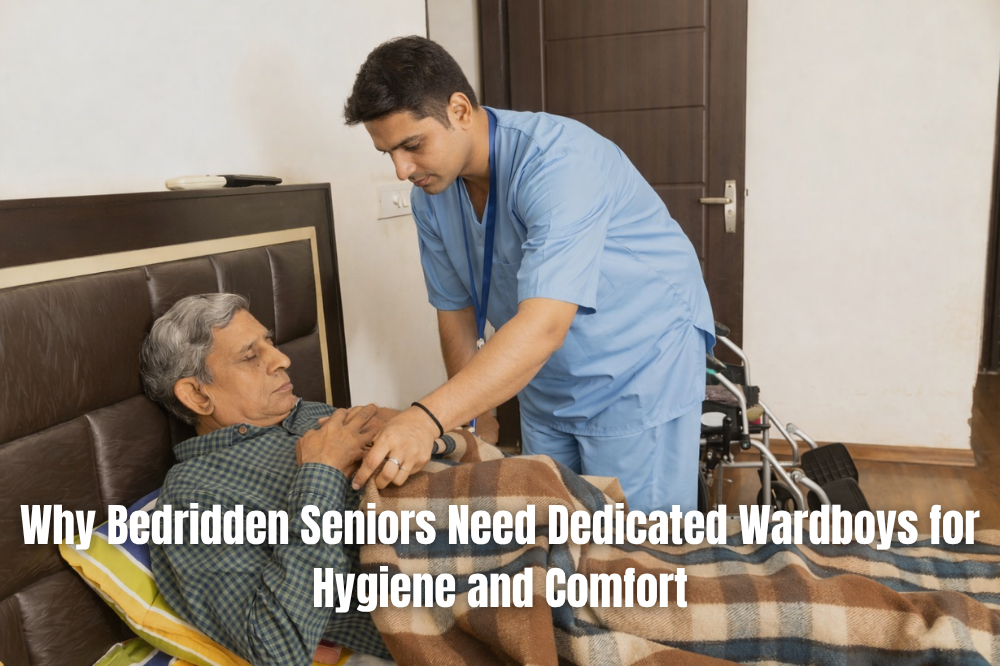
When an elderly parent becomes bedridden, their care needs change completely. Simple daily tasks like turning in bed, bathing, or using the toilet are no longer possible without help. What was once routine now requires constant physical support, hygiene management, and careful handling.
Many families try to manage this on their own. But over time, they realise that bedridden care is not just about helping, it requires skill, strength, and consistency.
This is where a trained wardboy becomes essential.
In this article, we’ll explain why dedicated wardboys are important for bedridden seniors and how they ensure hygiene, comfort, and dignity every day.
What Challenges Do Bedridden Seniors Face?
Bedridden elderly patients are at higher risk of:
- Bedsores (pressure ulcers)
- Skin infections
- Urinary infections
- Poor hygiene
- Muscle stiffness
- Blood circulation problems
- Emotional discomfort and embarrassment
Without proper care, these issues can worsen quickly and lead to hospitalisation.
Why Hygiene Is So Important for Bedridden Seniors
When a person is unable to move:
- Sweat, urine, or stool can remain on the skin
- Skin stays moist, leading to infections
- Wounds or sores can develop
- Bad hygiene can affect dignity and confidence
Maintaining hygiene is not just about cleanliness—it’s about health, comfort, and self-respect.
How Wardboys Help Maintain Hygiene
1. Regular Cleaning and Bathing
Wardboys assist with:
- Sponge baths or full bathing
- Cleaning after toileting
- Diaper changes
They ensure the patient stays fresh and clean throughout the day.
2. Preventing Bedsores
Bedsores are one of the biggest risks for bedridden patients.
Wardboys:
- Reposition the patient every 2–3 hours
- Keep skin dry and clean
- Use proper techniques to reduce pressure
This prevents painful wounds and infections.
3. Maintaining Personal Dignity
Elderly parents often feel uncomfortable or embarrassed needing help for basic needs.
Wardboys are trained to:
- Handle patients respectfully
- Maintain privacy
- Provide care without making the patient feel helpless
4. Managing Toileting and Diaper Care
Proper hygiene during toileting is critical.
Wardboys:
- Clean thoroughly after each use
- Change diapers regularly
- Prevent infections and skin irritation
How Wardboys Improve Comfort
1. Safe Repositioning
Staying in one position causes pain and stiffness.
Wardboys:
- Turn the patient safely
- Adjust pillows and support
- Ensure comfortable positioning
2. Supporting Movement
Even bedridden patients need some movement.
Wardboys help with:
- Passive exercises
- Sitting up with support
- Moving from bed to wheelchair (if possible)
3. Reducing Physical Discomfort
With proper care:
- Muscle stiffness reduces
- Blood circulation improves
- Pain and pressure reduce
Why Families Should Not Handle This Alone
Caring for a bedridden patient requires:
- Physical strength
- Proper technique
- Time and consistency
- Emotional patience
Families often face:
- Back pain or injury
- Exhaustion
- Sleep disturbance
- Emotional stress
Without training, even small mistakes can lead to injuries or infections.
Why a Dedicated Wardboy Makes a Big Difference
A trained wardboy:
- Provides consistent daily care
- Maintains hygiene professionally
- Handles lifting and repositioning safely
- Reduces risk of complications
- Supports both patient and family
They become an essential part of home care—especially for long-term bedridden patients.
Shree Swami Samarth Patients Seva: Reliable Bedridden Care at Home
At Shree Swami Samarth Patients Seva (www.sssps.in), we provide trained wardboys who specialise in caring for bedridden elderly patients.
Our services include:
- Hygiene and bathing support
- Diaper and toileting care
- Bed positioning and mobility assistance
- Bedsore prevention
- 24/7 care options
- Respectful and compassionate service
We ensure your loved ones receive hospital-level care with the comfort of home.
FAQs
Q1: Why is repositioning important for bedridden patients?
It prevents bedsores, improves blood circulation, and reduces pain.
Q2: Can family members manage hygiene alone?
They can, but long-term care is physically and emotionally demanding without professional help.
Q3: How often should hygiene care be done?
Daily bathing and regular cleaning after toileting are essential.
Q4: Do wardboys stay full-time?
Yes, part-time, full-time, and 24-hour options are available.
Conclusion
Caring for a bedridden elderly parent is not just about helping, it’s about ensuring cleanliness, comfort, safety, and dignity every single day.
A dedicated wardboy brings the right skills, consistency, and compassion needed for this level of care.
At Shree Swami Samarth Patients Seva, we support families by providing trained professionals who ensure your loved ones are cared for with respect and attention.
Because every parent deserves comfort not discomfort in their most vulnerable time.