

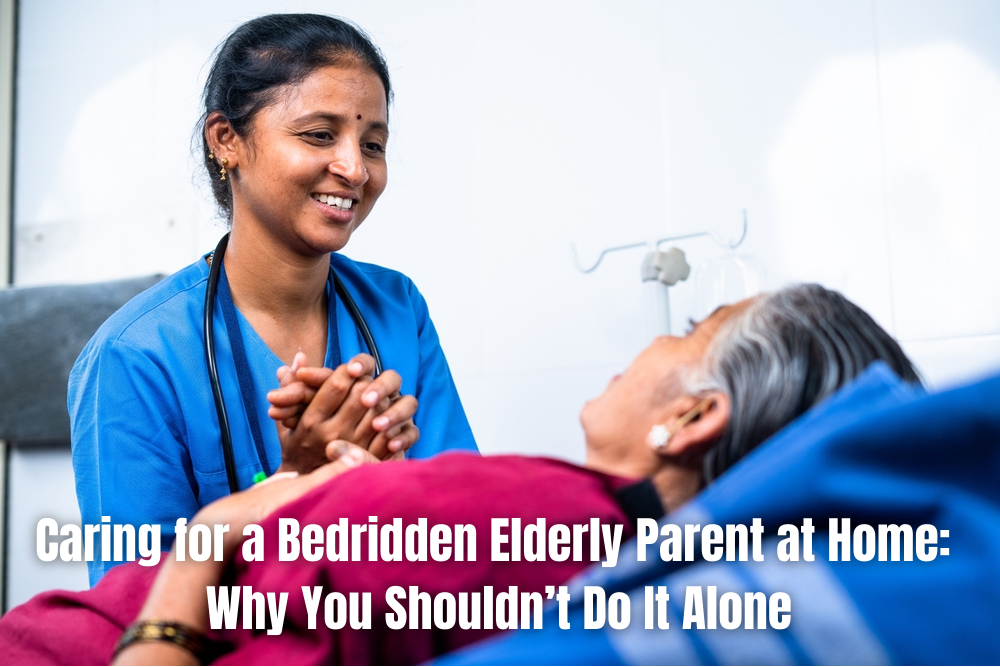
Caring for a bedridden elderly parent at home is one of the most loving yet challenging responsibilities a family can take on. When a parent becomes unable to walk, sit, or perform daily activities on their own due to stroke, fracture, advanced illness, dementia, or extreme weakness, their needs increase significantly.
Many families try to handle everything themselves out of love, duty, or financial concern. But the truth is, bedridden care is physically demanding, medically sensitive, and emotionally exhausting.
In this article, we’ll explain why caring for a bedridden elderly parent alone can become overwhelming and why professional help is not a luxury, but a necessity.
Why Bedridden Care Is So Demanding
When a senior becomes bedridden, they require:
- Help with turning and repositioning
- Complete assistance with bathing and hygiene
- Feeding support
- Diaper changes and toileting care
- Medication management
- Monitoring for infections
- Constant supervision
This level of care is needed every single day sometimes even through the night.
The Physical Challenges Families Face
1. Risk of Injury While Lifting
Helping a bedridden parent sit up or turn without training can cause:
- Back injury to the caregiver
- Accidental falls
- Joint strain for the elderly parent
Professional wardboys and caretakers are trained in safe lifting and repositioning techniques.
2. Preventing Bedsores
Bedridden seniors are at high risk of pressure sores (bedsores) if not turned every 2–3 hours.
Improper repositioning can lead to:
- Skin breakdown
- Painful wounds
- Infection
- Hospital readmission
Trained caregivers know how to prevent and manage these issues.
3. Managing Hygiene and Dignity
Bathing, cleaning, and diaper changes require patience and skill. Families often feel uncomfortable or emotionally strained performing these tasks.
Professional caregivers maintain hygiene with respect and dignity.
The Medical Risks of Managing Alone
Bedridden elderly parents are vulnerable to:
- Urinary infections
- Pneumonia
- Blood clots
- Sudden BP or sugar fluctuations
- Worsening weakness
Without proper monitoring, small issues can quickly become serious.
A nurse can:
- Monitor vitals regularly
- Administer injections or drips
- Manage feeding tubes or oxygen
- Observe early warning signs
Emotional Impact on Families
Caring for a bedridden parent alone can lead to:
- Physical exhaustion
- Sleepless nights
- Irritability
- Guilt
- Emotional burnout
Many family caregivers silently struggle but hesitate to ask for help.
Over time, exhaustion can affect relationships, work life, and mental health.
Why Professional Help Makes a Huge Difference
1. Safe Physical Assistance
Caretakers and wardboys:
- Turn and reposition safely
- Help with hygiene
- Support feeding
- Assist with passive exercises
2. Medical Monitoring
Nurses ensure:
- Timely medicines
- Wound care
- Infection monitoring
- Proper recovery tracking
3. Emotional Support
Bedridden seniors often feel lonely or depressed. Professional caregivers provide:
- Conversation
- Reassurance
- Companionship
4. Peace of Mind for Families
When trained professionals are involved:
- Families sleep better
- Stress reduces
- Emergencies are handled calmly
- Parents receive consistent care
You Are Not Weak for Asking for Help
Many families believe they must handle everything themselves. But caring for a bedridden parent is not meant to be a one-person responsibility.
Seeking professional help means:
- You want safer care
- You value your parent’s comfort
- You understand your limits
- You care enough to choose expertise
Shree Swami Samarth Patients Seva: Complete Bedridden Care at Home
At Shree Swami Samarth Patients Seva (www.sssps.in), we provide trained:
- Caretakers
- Nurses
- Wardboys
for bedridden elderly parents.
Our services include:
- 24/7 care options
- Bedsore prevention and management
- Hygiene and diaper care
- Medication supervision
- Post-hospital recovery support
- Emotional companionship
We work alongside families not instead of them.
FAQs
Q1: Is it possible to manage bedridden care alone?
It is possible temporarily, but long-term care usually requires professional support.
Q2: How often should bedridden patients be turned?
Every 2–3 hours to prevent bedsores.
Q3: Do I need a nurse or a caretaker?
If there are medical needs like injections or wound care, a nurse is required. For daily physical care, a trained caretaker or wardboy is helpful.
Q4: Can professional care reduce hospital visits?
Yes. Proper monitoring prevents complications and infections.
Conclusion
Caring for a bedridden elderly parent is an act of deep love but it should not come at the cost of your health and peace of mind.
Professional caregivers bring safety, skill, and stability into the home. They ensure your parents receive proper care while you remain emotionally present, not physically exhausted.
At Shree Swami Samarth Patients Seva, we stand with families during this demanding phase offering support that protects both your parents and you. You don’t have to do this alone.