
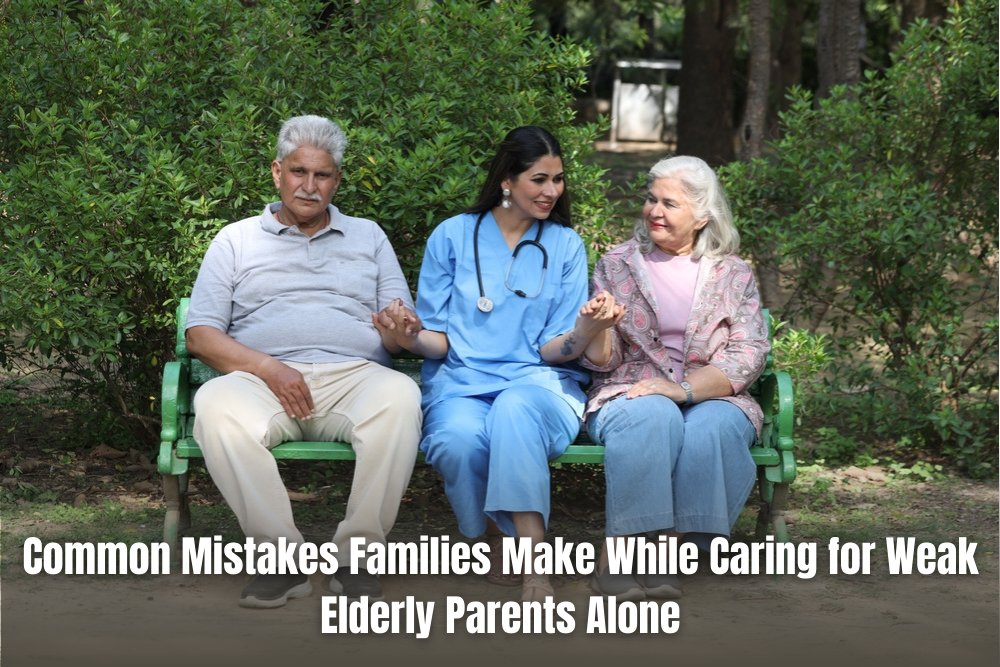
Common Mistakes Families Make While Caring for Weak Elderly Parents Alone
Caring for weak elderly parents is an act of love. Families do their best—managing medicines, helping with daily tasks, and constantly worrying about their parents’ safety. But when this care is handled alone, without proper support or guidance, certain mistakes can happen unintentionally.
These mistakes are not because families don’t care—but because elderly care is physically, emotionally, and mentally demanding.
In this article, we’ll discuss the most common mistakes families make while caring for weak elderly parents alone, why they happen, and how they can be avoided to ensure better health, dignity, and peace of mind.
1. Ignoring Early Signs of Weakness
Many families assume weakness is “normal with age” and delay seeking help.
What happens:
- Slow walking is ignored
- Fatigue is brushed aside
- Loss of appetite is considered normal
Why this is risky:
Weakness can be a sign of poor nutrition, infection, medication side effects, or underlying illness.
How to avoid it:
Regular observation and early intervention—either through a nurse or caretaker—can prevent serious health decline.
2. Trying to Do Everything Alone
Family members often try to manage:
- Lifting and moving parents
- Bathing and toileting
- Night-time care
- Medicines and meals
What goes wrong:
- Family members become exhausted
- Risk of injury to both senior and caregiver
- Emotional burnout
How to avoid it:
Accepting professional help is not failure—it’s responsible care.
3. Poor Medication Management
Weak elderly parents often take multiple medicines.
Common mistakes:
- Missed doses
- Wrong timing
- Double dosing
- Mixing medicines incorrectly
Why it’s dangerous:
This can lead to low BP, sugar crashes, dizziness, or hospital emergencies.
How to avoid it:
A caretaker or nurse ensures medicines are given on time and correctly every day.
4. Not Encouraging Safe Movement
Families sometimes stop elderly parents from moving due to fear of falls.
What happens:
- Muscles weaken faster
- Joint stiffness increases
- Seniors become bedridden
How to avoid it:
With supervision, gentle daily movement is essential. Caretakers help seniors move safely without risk.
5. Overlooking Nutrition and Hydration
Weak seniors often eat less or forget to drink water.
Common issues:
- Skipping meals
- Eating very little
- Dehydration
Why it matters:
Poor nutrition worsens weakness, immunity, and recovery.
How to avoid it:
Caretakers ensure meals, fluids, and supplements are taken properly.
6. Ignoring Emotional Health
Families focus heavily on physical needs but forget emotional well-being.
What seniors feel:
- Loneliness
- Helplessness
- Fear
- Loss of confidence
What families miss:
Emotional pain often shows as silence, irritability, or withdrawal.
How to avoid it:
Companionship and regular interaction—something caretakers naturally provide—helps seniors feel valued.
7. Unsafe Handling During Daily Tasks
Helping with bathing, walking, or shifting positions without training can cause falls or injuries.
Why it happens:
Families are not trained in safe handling techniques.
How to avoid it:
Caretakers and wardboys are trained to assist safely and respectfully.
8. Delaying Professional Help Until an Emergency
Many families seek help only after:
- A fall
- Sudden hospitalization
- Severe weakness
Why this is a mistake:
Preventive care is always better than emergency care.
How to avoid it:
Early caregiving support prevents crises and reduces hospital visits.
9. Night-Time Neglect Due to Fatigue
Caring through the night is extremely tiring.
Risks at night:
- Falls during bathroom visits
- Confusion or anxiety
- Missed emergencies
How to avoid it:
A night caretaker ensures constant supervision while families rest.
10. Feeling Guilty About Getting Help
Many families believe hiring help means abandoning responsibility.
Truth:
Getting professional support means you are choosing better care, not less love.
How Professional Caregivers Make a Difference
Trained caretakers:
- Monitor weakness and health changes
- Help with mobility and hygiene
- Ensure meals and medicines
- Provide emotional companionship
- Reduce family stress
- Improve quality of life
Shree Swami Samarth Patients Seva: Supporting Families with Compassion
At Shree Swami Samarth Patients Seva (www.sssps.in), we work closely with families caring for weak elderly parents.
Our trained caretakers, nurses, and wardboys:
- Understand elderly weakness and fatigue
- Provide safe daily assistance
- Support emotional well-being
- Offer part-time, full-time, and 24/7 care
We don’t replace family—we support them.
FAQs
Q1: Is weakness in old age always normal?
Some weakness is normal, but sudden or worsening weakness needs attention.
Q2: Can a caretaker help prevent hospital visits?
Yes. Regular monitoring and daily support reduce emergencies.
Q3: When should we hire professional help?
As soon as daily care becomes physically or emotionally overwhelming.
Q4: Can caretakers stay overnight?
Yes. Night and 24-hour care options are available.
Conclusion
Caring for weak elderly parents alone is challenging, and mistakes are common—but they are avoidable. Recognizing limitations and seeking the right help ensures your parents live safely, comfortably, and with dignity.
A trained caretaker doesn’t take love away from your care—they strengthen it.
At Shree Swami Samarth Patients Seva, we’re here to walk this journey with you—every step of the way.