

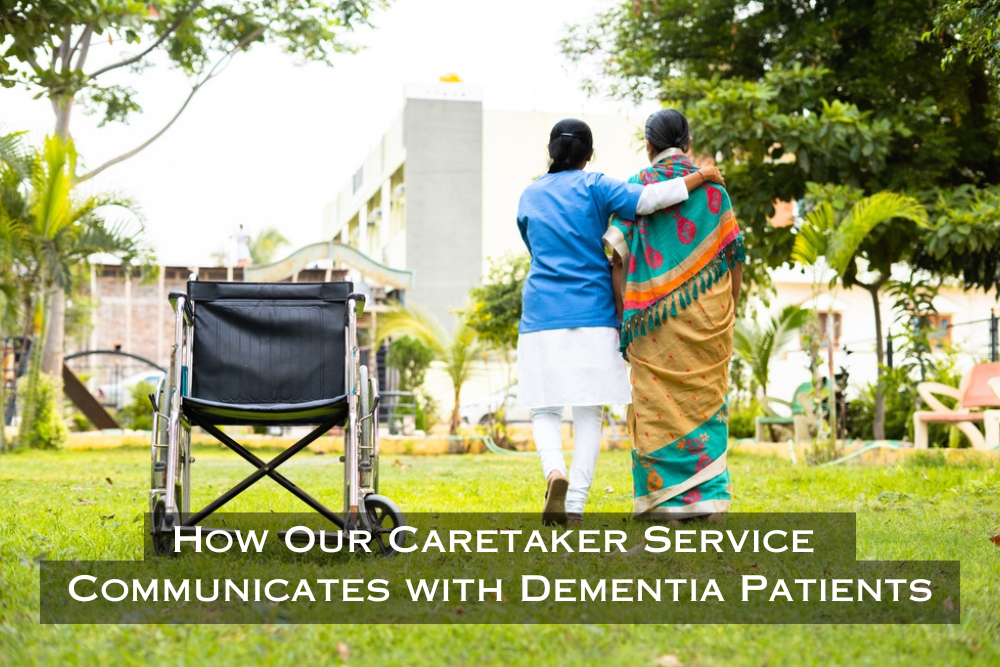
How Our Caretaker Service Communicates with Dementia Patients

Communicating with a loved one who has dementia is never easy. The confusion, memory loss, and emotional changes can make conversations feel one-sided and heartbreaking. Families often wish they could reconnect the way they used tobut dementia requires a very different kind of understanding.

At Shree Swami Samarth Patients Seva (SSSPS), our caretaker service specializes in dementia care, where empathy, patience, and gentle communication form the foundation of our approach. This article explains how our trained caretakers communicate with dementia patients ensuring they feel safe, respected, and emotionally supported every day.


Understanding Dementia and Communication Challenges

Dementia affects how the brain processes language and memory, leading to:

  • Difficulty understanding conversations

  • Repetition of words or phrases

  • Forgetting people or familiar surroundings

  • Sudden mood swings

  • Withdrawal or silence

These behaviors can be confusing, but our caretakers know that behind every reaction is a need for comfort, familiarity, and care.


How Our Caretaker Service Communicates with Dementia Patients

1. Speaking Calmly and Clearly

Caretakers use a slow, gentle tone and simple sentences. This helps the patient stay calm and understand better, avoiding confusion or frustration.

2. Maintaining Eye Contact and Warm Expressions

Non-verbal cues matter more than words. Our caretakers smile, use eye contact, and reassuring gestures to create a sense of trust and comfort.

3. Listening Without Rushing

Patience is key. Dementia patients may take longer to express thoughts our caretakers wait, listen, and never interrupt or correct harshly.

4. Using Familiar Words and Routines

Caretakers use familiar phrases and maintain daily routines. Consistency gives patients a sense of safety and predictability, which is essential for dementia care.

5. Connecting Through Memories

Our caretaker service encourages memory recall talking about childhood, family, or old songs which often brings a smile and emotional connection.

6. Handling Emotional Outbursts Gently

Caretakers understand that anger or tears come from fear or confusion, not intentional behavior. They calmly redirect the patient’s focus or engage in soothing activities.

7. Providing Companionship and Reassurance

Sometimes, just sitting together in silence or holding a hand speaks volumes. Our caretakers know that emotional presence matters as much as words.


Benefits for Families

When you choose a professional caretaker service, your loved one receives more than daily help they receive emotional connection and stability. Families gain:

  • Peace of mind knowing their parent is in caring hands

  • Relief from daily stress and burnout

  • A positive, calm home environment

  • Regular updates on health and behavior


Why Choose Shree Swami Samarth Patients Seva

At www.sssps.in, our caretaker services are designed for elderly care, especially for patients with dementia or Alzheimer’s.

We provide:

  • Trained caretakers for dementia communication and support

  • 24/7 home assistance with emotional and physical care

  • Structured routines for safety and familiarity

  • Regular family updates and complete transparency

We understand that dementia affects the whole family and our caretakers work with compassion to make every day easier.


FAQs

Q1: Can a caretaker communicate effectively with advanced dementia patients?
Yes. Our caretakers use touch, tone, and facial expressions to build comfort, even when verbal communication is limited.

Q2: Will the caretaker also help with medicines and hygiene?
Yes, caretakers assist with feeding, bathing, hygiene, and medication reminders.

Q3: Do caretakers stay full-time for dementia patients?
Yes, we offer both part-time and full-time caretaker services depending on your parent’s needs.

Q4: How do caretakers handle aggression or mood swings?
They stay calm, avoid confrontation, and gently shift the patient’s focus to something soothing or familiar.


Conclusion

Caring for a parent with dementia requires more than love it needs understanding and professional guidance. At Shree Swami Samarth Patients Seva, our caretaker service is built around empathy, patience, and connection.

We ensure that every word, gesture, and interaction helps your loved one feel safe, valued, and cared for because even when memories fade, kindness stays.

Visit www.sssps.in to learn more about our specialized caretaker services for dementia patients.
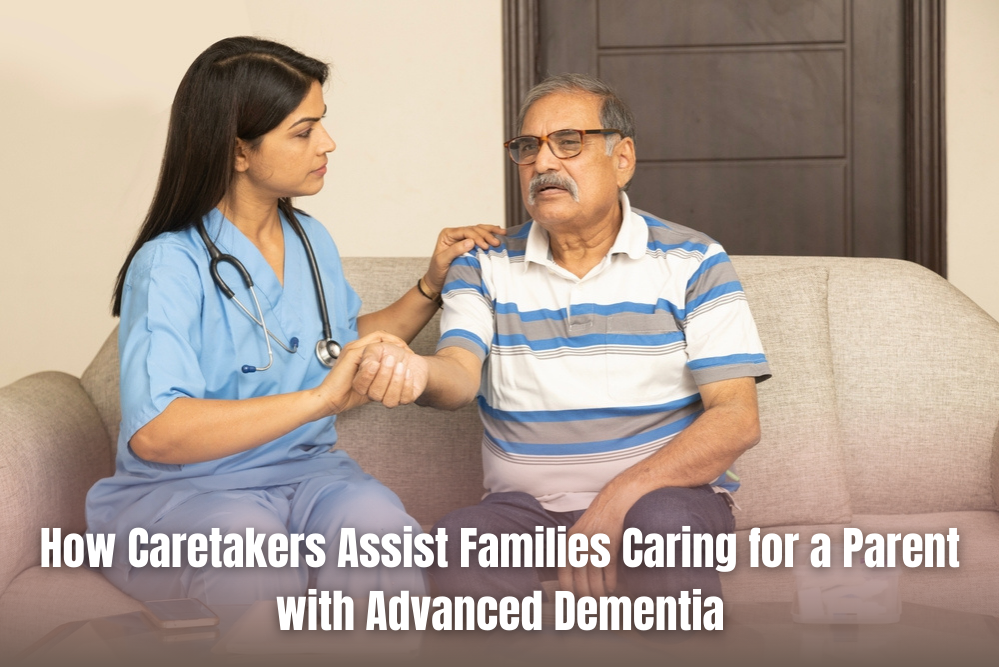
How Caretakers Assist Families Caring for a Parent with Advanced Dementia

Caring for a parent with advanced dementia can be overwhelming for families. Memory loss, confusion, behavioral changes, and difficulty with basic daily activities make it difficult for family members to manage everything on their own. If you are reading this, you’re probably searching for ways to ensure your loved one receives the right support while also easing the emotional and physical stress on your family. In this article, you will learn how trained caretakers can provide daily living support, emotional comfort, and medical help for seniors with dementia, especially in India.

Why Dementia Patients Need Specialized Support

Advanced dementia brings challenges beyond memory loss. Patients often struggle with:

  • Eating and remembering mealtimes 
  • Bathing, dressing, and maintaining hygiene 
  • Wandering or confusion, especially at night 
  • Difficulty communicating needs 
  • Changes in mood and behavior (irritability, depression, anxiety) 
  • Needing supervision for safety 

Family members, while loving and caring, may not always have the time or skills to manage these situations every day. This is where professional caretakers step in.


How Caretakers Support Seniors with Advanced Dementia

1. Help with Daily Activities

Caretakers assist with essential tasks such as bathing, dressing, grooming, and feeding, ensuring the elderly remain clean and comfortable.

2. Medication Reminders

Dementia patients may forget their medicines. Caretakers ensure timely administration as per the doctor’s advice.

3. Emotional Comfort

They offer companionship, reducing feelings of loneliness and fear. Caretakers are trained to handle mood swings patiently and calmly.

4. Safety Supervision

Dementia patients may wander, forget directions, or fall easily. Caretakers keep a watchful eye to prevent accidents.

5. Structured Routine

Maintaining a daily schedule helps dementia patients feel more secure. Caretakers make sure eating, sleeping, and activity times remain consistent.

6. Support for Families

By taking on the daily challenges, caretakers give family members relief and peace of mind, allowing them to spend quality time with their loved ones instead of only focusing on responsibilities.

How Caretakers Specifically Help Advanced Dementia Patients

  • Managing Confusion: They calmly redirect patients when they feel lost or agitated. 
  • Feeding Assistance: Many patients forget how to eat or lose appetite; caretakers help with feeding gently. 
  • Personal Hygiene: Bathing or changing clothes can be resisted by patients; caretakers use patience and simple methods to help them cooperate. 
  • Mobility Support: For seniors who lose balance, caretakers provide safe movement support inside the house. 
  • Night-Time Care: Dementia symptoms often worsen at night (sundowning). Caretakers ensure supervision and calm reassurance during late hours.

Why Families Feel More Relaxed with Caretakers

When a trained caretaker is present, families feel at ease knowing that:

  • Their parent is being cared for with patience and respect 
  • Medicines and meals are never missed 
  • Safety risks are managed 
  • The elderly are never left alone during confusion or distress
    This allows families to reduce stress and focus on their own work or health, while still being emotionally present for their parent.

FAQs

  1. Why can’t families manage dementia care on their own?
    Advanced dementia requires 24/7 patience, medical knowledge, and constant supervision, which can be difficult for families balancing work and personal responsibilities.
  2. Do caretakers only help with physical tasks?
    No, caretakers also provide emotional companionship, which is equally important for dementia patients.
  3. Are caretakers trained for dementia?
    Yes, trained dementia caretakers understand the condition, know how to handle confusion and mood swings, and ensure patient safety.
  4. Can caretakers help at night?
    Yes, families can hire caretakers for night-time or 24/7 care depending on the need.

Conclusion

Caring for a parent with advanced dementia is emotionally heavy and practically challenging. A trained caretaker ensures your loved one is cared for with patience, respect, and safety, while your family finds much-needed relief.

At Shree Swami Samarth Patients Seva (SSSPS), we provide trained dementia caretakers in India who understand the unique needs of seniors with memory loss and advanced conditions. To know more, visit www.sssps.in.