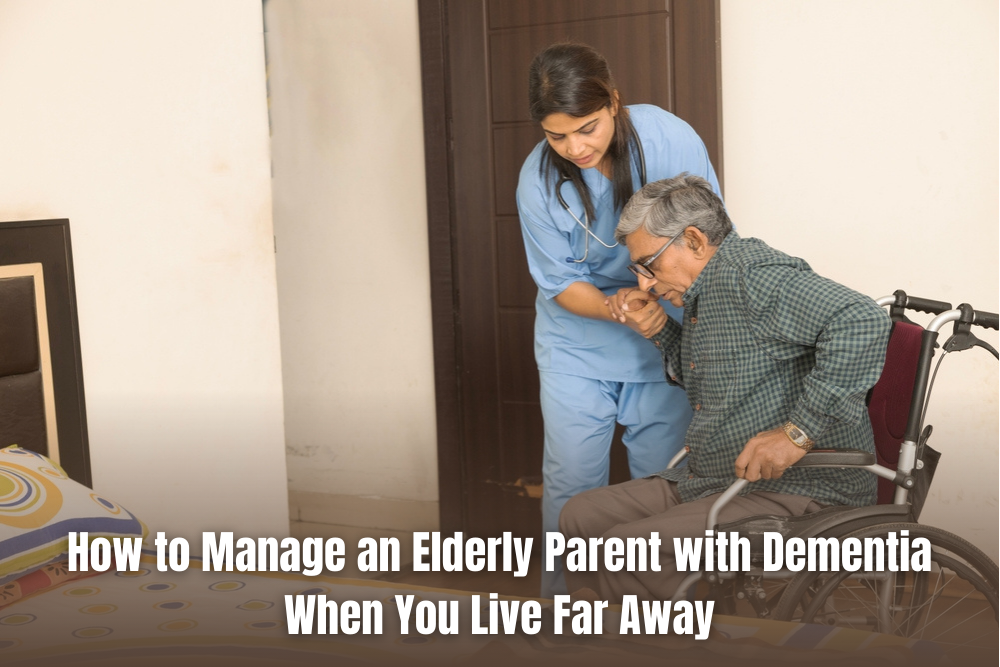


How to Manage an Elderly Parent with Dementia When You Live Far Away

Living far away from your parents is already difficult. But when your elderly parent has dementia, the worry increases every single day. You may constantly think:

  • What if they forget to take their medicines?
  • What if they wander outside?
  • What if something happens at night?
  • Are they feeling lonely?

Managing dementia from a distance is emotionally exhausting. You want to be there but work, responsibilities, or living abroad make it impossible.

The good news is: with the right planning and professional support, you can ensure your parents stay safe and cared for  even when you’re not physically present.

This article will guide you step by step.

First: Understand What Dementia Requires

Dementia is not just forgetfulness. It can include:

  • Memory loss
  • Confusion about time and place
  • Repeating questions
  • Mood swings
  • Aggression or fear
  • Wandering
  • Difficulty managing daily tasks

Dementia patients need routine, supervision, and emotional reassurance  every day.

Practical Steps to Manage Dementia from a Distance

1. Ensure Daily Supervision

A dementia patient should not be left alone for long hours.

If you live far away, arrange:

  • A full-time caretaker
  • A live-in caregiver
  • A trusted family member nearby

Professional supervision is one of the most important safety measures.

2. Hire a Trained Dementia Caregiver

Not every caretaker understands dementia behavior. Choose someone trained in:

  • Handling confusion calmly
  • Preventing wandering
  • Managing mood changes
  • Giving medicines correctly
  • Creating a structured daily routine

A trained caregiver becomes your eyes and hands at home.

3. Create a Fixed Daily Routine

Dementia patients feel safer with routine. Ensure:

  • Fixed waking and sleeping times
  • Regular meal timings
  • Medicine schedules
  • Light daily activities

Consistency reduces anxiety and agitation.

4. Make the Home Safe

When living far away, ensure the home is:

  • Free from loose rugs or slippery floors
  • Equipped with bathroom grab bars
  • Safe from open gas stoves
  • Well-lit at night
  • Locked safely to prevent wandering

Small safety changes make a big difference.

5. Use Technology Smartly

Technology can help you stay connected:

  • Daily video calls
  • CCTV monitoring (if comfortable)
  • Medication reminder apps
  • GPS tracking for wandering risk
  • Emergency alert devices

These tools provide reassurance but they should not replace physical supervision.

6. Stay Emotionally Connected

Even from far away, your voice matters.

  • Call daily
  • Keep conversations simple and calm
  • Don’t correct or argue about memory mistakes
  • Talk about familiar memories

Your emotional presence gives comfort.

7. Stay in Regular Touch with the Caregiver

Good communication with the caregiver is essential:

  • Ask for daily updates
  • Discuss behavior changes
  • Monitor eating and sleeping patterns
  • Stay informed about medical visits

You should always know what’s happening.

8. Arrange Regular Doctor Checkups

Even if you are far away:

  • Schedule routine neurologist visits
  • Ensure prescriptions are followed
  • Monitor for sudden changes

Early medical attention prevents complications.

Emotional Challenges of Managing from Far

Children living away often feel:

  • Guilt
  • Anxiety
  • Helplessness
  • Fear of missing emergencies

Remember: being physically far doesn’t mean you care less. Planning properly is an act of responsibility.

Why Professional Dementia Care Is Essential

Dementia patients need:

  • Constant supervision
  • Emotional reassurance
  • Calm handling of aggression
  • Structured daily support
  • Safe mobility assistance

Professional caregivers reduce risks and protect both patient and family from emotional burnout.

Shree Swami Samarth Patients Seva: Supporting Families from a Distance

At Shree Swami Samarth Patients Seva (www.sssps.in), we specialize in dementia care at home.

Our trained caregivers:

  • Provide 24/7 supervision
  • Follow structured routines
  • Manage medication schedules
  • Prevent wandering
  • Offer companionship
  • Give regular updates to families

We understand the stress of living far away. Our goal is to ensure your parents feel safe, calm, and respected while you stay informed and reassured.

FAQs

Q1: Can dementia patients live alone safely?
Usually no. Daily supervision is strongly recommended.

Q2: How often should I visit if I live far away?
Visit when possible, but daily professional care ensures safety between visits.

Q3: What if my parents refuse a caregiver?
With patience and respectful introduction, most patients gradually adjust.

Q4: How do I know the caregiver is trustworthy?
Choose a verified agency with trained staff and regular communication.

Conclusion

Managing a parent with dementia while living far away is emotionally challenging but it is manageable with the right support system.

You may not be there physically every day. But by arranging professional care, maintaining communication, and planning properly, you ensure your parents are safe, comforted, and cared for.

At Shree Swami Samarth Patients Seva, we stand beside families navigating dementia care  especially when distance makes things harder.

You don’t have to choose between your responsibilities and your parents’ safety. With the right support, you can manage both.

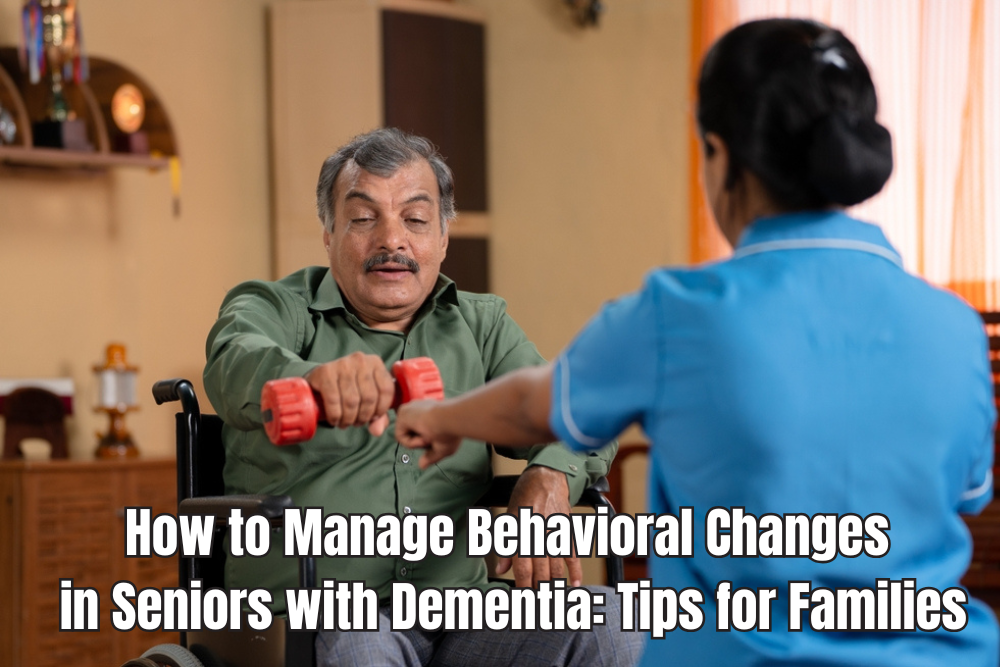
How to Manage Behavioral Changes in Seniors with Dementia: Tips for Families

Caring for a senior with dementia can be emotionally challenging, especially when they experience sudden behavioral changes. From mood swings and aggression to confusion and anxiety, these changes can be overwhelming for both the patient and their family. However, with the right strategies, you can manage these behaviors with patience, understanding, and care.

In this article, we’ll explore the common behavioral changes in seniors with dementia and offer practical tips for families to handle these challenges. By the end, you’ll have a better understanding of how to provide a calm and supportive environment for your loved one.

Why Do Behavioral Changes Occur in Seniors with Dementia?

Dementia affects the brain’s ability to process information, leading to confusion, frustration, and emotional distress. Some common reasons for behavioral changes include:

  • Memory loss and confusion – Forgetting names, faces, or recent events can make seniors feel anxious.
  • Communication difficulties – Struggling to express thoughts can lead to frustration.
  • Physical discomfort – Pain, hunger, infections, or medication side effects can trigger mood swings.
  • Environmental factors – New places, loud noises, or unfamiliar faces can cause agitation.

Understanding these triggers is the first step in managing dementia-related behaviors.

Common Behavioral Changes and How to Manage Them

1. Agitation and Aggression

  • Stay calm and use a gentle tone when speaking.
  • Identify and eliminate triggers like loud noises, hunger, or fatigue.
  • Use distraction techniques, such as playing music or engaging in a favorite activity.

2. Wandering and Restlessness

  • Ensure doors and windows are locked if wandering becomes a safety concern.
  • Encourage regular physical activities to reduce restlessness.
  • Use identification bracelets in case they wander outside.


3. Repetitive Questions or Behaviors

  • Respond with patience, even if they ask the same question repeatedly.
  • Provide visual reminders, such as notes or labels, to reduce confusion.
  • Try redirecting their attention to another topic or activity.

4. Sundowning (Evening Confusion and Anxiety)

  • Maintain a consistent daily routine to prevent disorientation.
  • Ensure the room is well-lit to reduce shadows that may cause confusion.
  • Limit caffeine and screen time in the evening.

5. Hallucinations and Paranoia

  • Avoid arguing; instead, acknowledge their feelings and reassure them.
  • Remove potential triggers like mirrors or dark reflections that may cause confusion.
  • Consult a doctor if hallucinations become distressing.

6. Resistance to Care

  • Approach tasks like bathing or dressing with a positive and reassuring attitude.
  • Offer choices to give them a sense of control (e.g., “Would you like to wear the blue shirt or the red one?”).
  • Break tasks into small steps to make them more manageable.

Tips for Families to Handle Behavioral Changes

  • Stay Patient and Understanding: Dementia is unpredictable, and mood swings are not intentional.
  • Keep Communication Simple: Use short sentences and a calm tone when speaking.
  • Create a Safe and Familiar Environment: Reduce noise, maintain familiar surroundings, and establish a routine.
  • Encourage Social Interaction: Spending time with family and caregivers can reduce feelings of loneliness.
  • Take Care of Yourself: Caregiving is demanding—ensure you take breaks and seek support when needed.

The Role of Caretakers in Managing Dementia Behaviors

Professional caregivers play a crucial role in handling behavioral changes in seniors with dementia. They provide:

  • Personalized Care: Understanding triggers and using appropriate calming techniques.
  • 24/7 Supervision: Ensuring safety, especially for seniors prone to wandering.
  • Companionship: Engaging seniors in activities that stimulate cognitive function.
  • Emotional Support: Helping families cope with the challenges of caregiving.

At Shree Swami Samarth Patients Seva, we specialize in dementia care, ensuring your loved one receives compassionate and professional support.

FAQs About Managing Dementia Behavioral Changes

  1. Why does my loved one with dementia get angry so easily?
    Dementia affects memory and reasoning, making it frustrating for seniors to communicate their needs or recognize familiar people.
  2. How can I calm an anxious dementia patient?
    Speak in a soft voice, offer reassurance, and try engaging them in a familiar activity. Avoid arguing or correcting them.
  3. Is medication necessary to manage dementia behavior?
    Medication is not always required; behavioral changes can often be managed with a structured routine and a calm environment. However, consult a doctor if symptoms worsen.
  4. How do I prevent my loved one from wandering?
    Secure doors and windows, use identification bracelets, and engage them in daily activities to reduce restlessness.
  5. When should I consider hiring a professional caretaker?
    If caregiving becomes overwhelming or if your loved one requires constant supervision, hiring a professional caretaker can provide much-needed relief.

Conclusion

Managing behavioral changes in seniors with dementia requires patience, understanding, and the right approach. By identifying triggers, creating a structured environment, and seeking professional help when needed, you can provide the best care for your loved one.

If you need support, Shree Swami Samarth Patients Seva offers trained caregivers who specialize in dementia care. Visit www.sssps.in to ensure your loved one gets the compassionate and professional care they deserve.